Ukonsaari Island (Äijihsuálui) is the best-known sacred site of the Sámis in Finland. It is located about 11 kilometers to the northeast of the village of Inari on an open part of Lake Inari called Ukonselkä. It is an impressive, steep-sided, rocky island of caves and boulders which stands out from other islands in the area and being over 30 meter height it can be seen from far away in every direction.
“Äijih”, in Inari Sámi, means old man, grandfather or thunder. The Sámis have, like other northern indigenous peoples worshiped natural powers, such as the sun, water, wind and thunder. The god of thunder, Ukko, was the most important male deity.
The Treasure of Ukko
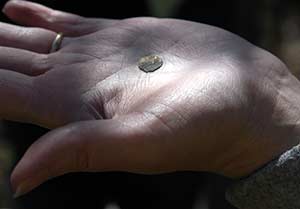
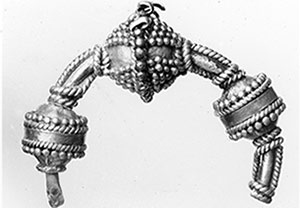
Ukko was evidently still worshiped at the end of the 1800s by placing animal catches, mostly deer bones and antlers, in a sacrificial cave. Local stories tell that it was customary to throw a coin into the lake at Ukonselkä and wish for favorable winds. In 1873 the Englishman Sir Arthur Evans, known as the excavator of Knossos, Crete, discovered a cave on Ukko, at the entrance of which was situated a half-circle of antlers. He made exploratory excavations on the island and found not only antlers and bones but a silver, filigree-decorated headband.
The headband is a woman’s decorative pendant placed around the temple. The headband of Ukonsaari Island was broken before it was discovered so half of it is missing. There are three hollow pearls woven into the round ring. Both the ring and the pearls are filigreed. This type of jewelry was not used in Finland or elsewhere in the Nordic countries, but originated in the eastern Russia regions of the Kama and Vytchegda Rivers from about 1200 A.D.
Eija Ojanlatva
 |
 |